The Inventory Report: The Document That Decides Every Deposit Dispute
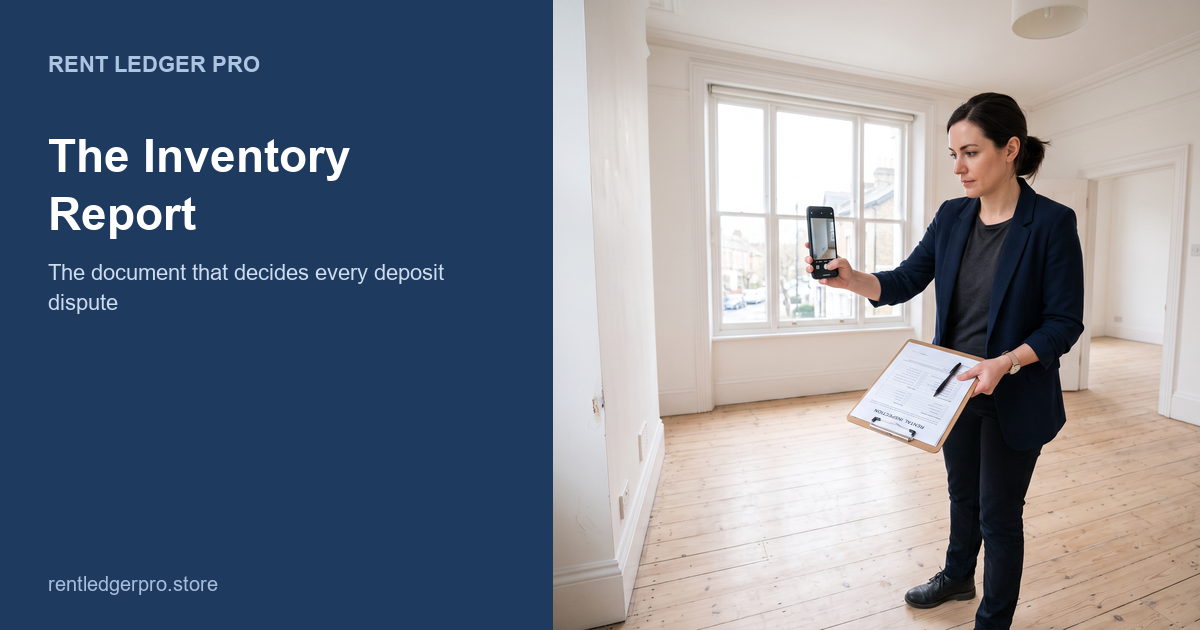
Almost every deposit dispute is decided by a document written months earlier, by a landlord who was in a hurry.
Deposit adjudication is done on paper. Nobody visits the property. Nobody hears your account of what the carpet looked like. Two sets of evidence are compared, and the better one wins.
If yours is a memory and theirs is a photograph, you lose. That is not unfair - it is the only way the process could work.
What an inventory actually is
A dated record of the property's condition at the moment the tenancy started, agreed by both sides. Sometimes called a check-in report or schedule of condition.
It is not a list of furniture. A list of furniture proves an item existed. An inventory proves what condition it was in - and condition is what every dispute turns on.
Why it decides the outcome
To deduct from a deposit you have to show three things:
- The property was in condition X at the start
- It is in worse condition Y now
- The difference is damage, not fair wear and tear
The inventory is the only thing that establishes point 1. Without it, points 2 and 3 are unprovable no matter how obvious the damage looks to you. The adjudicator cannot know the mark was not already there.
This is why it is the most expensive thing landlords skip. A missing inventory does not weaken your claim. It usually ends it.
What to record
Room by room, in a fixed order so nothing is missed.
Every room
- Walls and ceiling - colour, finish, any marks, scuffs or holes, with locations
- Floor - type, condition, existing stains or wear, noted precisely
- Windows - glass, frames, locks, keys present, blinds or curtains
- Doors - condition, handles, keys, whether they close properly
- Sockets, switches, light fittings - present, working, bulbs in place
- Radiators or heaters - condition and whether tested
Kitchen and bathroom, additionally
- Every appliance: make, condition, tested and working
- Worktops, splashbacks, sealant and grout condition
- Sanitaryware, taps, shower, seals
- Extractor fans, tested
Whole property
- Meter readings - electricity, gas, water, photographed with the serial numbers visible
- Keys issued - how many of each, to whom
- Smoke and carbon monoxide alarms - present, tested, dated
- Cleanliness standard - describe it, because “professionally cleaned” is the standard you can require back
- Garden, garage, outbuildings, bin store
Photographs: the part that wins
Written descriptions get argued about. Photographs do not.
- Timestamp everything. Camera date on, or photograph a newspaper or phone screen showing the date in the first shot
- Wide, then close. A wide shot establishes which room, a close shot shows the detail. A close-up alone proves nothing about where it was taken
- Photograph what is fine, not just what is damaged. The clean carpet photograph is the one that proves the stain came later
- Good light. Curtains open, lights on. Dark photographs hide the marks you will want to point at
- Meters, appliance serial numbers, alarm test dates
Fifty photographs is not excessive. It is twenty minutes that protects a deposit worth several weeks of rent.
Getting it signed
An unsigned inventory is much weaker than a signed one, though not worthless.
Best practice: go through it with the tenant at check-in, let them add their own comments, and both sign and date every page. Give them a copy immediately.
If they will not sign on the day, send it to them in writing with a stated period - commonly seven days - to raise any disagreement, and keep proof you sent it. Silence after a documented deadline is far more persuasive than a document they never saw.
Fair wear and tear - the line adjudicators actually draw
| Situation | Usually treated as |
|---|---|
| Carpet worn along a hallway after three years | Wear |
| A cigarette burn in that carpet | Damage |
| Paint faded and slightly scuffed | Wear |
| A hole in the plasterboard | Damage |
| Limescale on a tap | Wear |
| A cracked basin | Damage |
| Mould from a tenant never opening a window | Arguable - depends on ventilation provided |
Two further points that surprise landlords. You cannot generally charge the full replacement cost of a part-worn item - only the remaining life you lost. And longer tenancies attract more allowable wear, so the same carpet damage after four years is judged differently than after four months.
The check-out
Repeat the exercise the day possession returns, in the same order, with the original inventory open beside you.
Then set the two side by side. Your claim is the difference between them, itemised, with the photographs attached - not a description of how the property feels now.
More on the deadlines that apply here: How to End a Tenancy Properly.
Frequently asked questions
Do I need a professional inventory clerk?
No, but their reports carry weight because they are independent and follow a standard format. For a higher-value property or a portfolio it is often worth the cost. For one flat, a careful self-made inventory with good photographs does the job.
Can I charge the tenant for the inventory?
In several jurisdictions, no - the Tenant Fees Act 2019 prohibits it in England, for example. Check before you pass on the cost.
What if I never did one?
Deduct only what you can independently evidence - unpaid rent from your rent log, an invoice for a repair with photographs of the damage, a professional cleaning bill against a clause requiring it. Expect condition claims to fail. Then do one before the next tenant moves in.
How long should I keep it?
Until well after the deposit is settled and any dispute window has closed. Keeping it for the life of your ownership costs nothing and occasionally settles an argument years later.
Does an inventory help with anything besides deposits?
Yes - insurance claims, disputes about what was supplied, and evidence that safety items were present and tested at the start of the tenancy.
The paperwork that backs it up
An inventory proves condition. Your rent log proves payment. Between them they cover almost everything a deposit dispute can turn on.
The Rental Property Tracker keeps twelve months of rent expected against rent received per property, so an arrears deduction is a figure you can show rather than assert. $27 once.
The Residential Lease Agreement Template sets the standard the property must be returned in and the basis for deductions - the clauses the inventory is measured against. $24 once.
General information for landlords, not legal advice. Deposit protection rules, permitted deductions, adjudication procedures and restrictions on charging tenants for inventories differ substantially between countries, states and cities. Confirm your position with a qualified solicitor or attorney in your jurisdiction.
-
Posted in
check-in, deposits, inventory, landlord legal