The Annual Landlord Review: Twelve Checks, One Afternoon
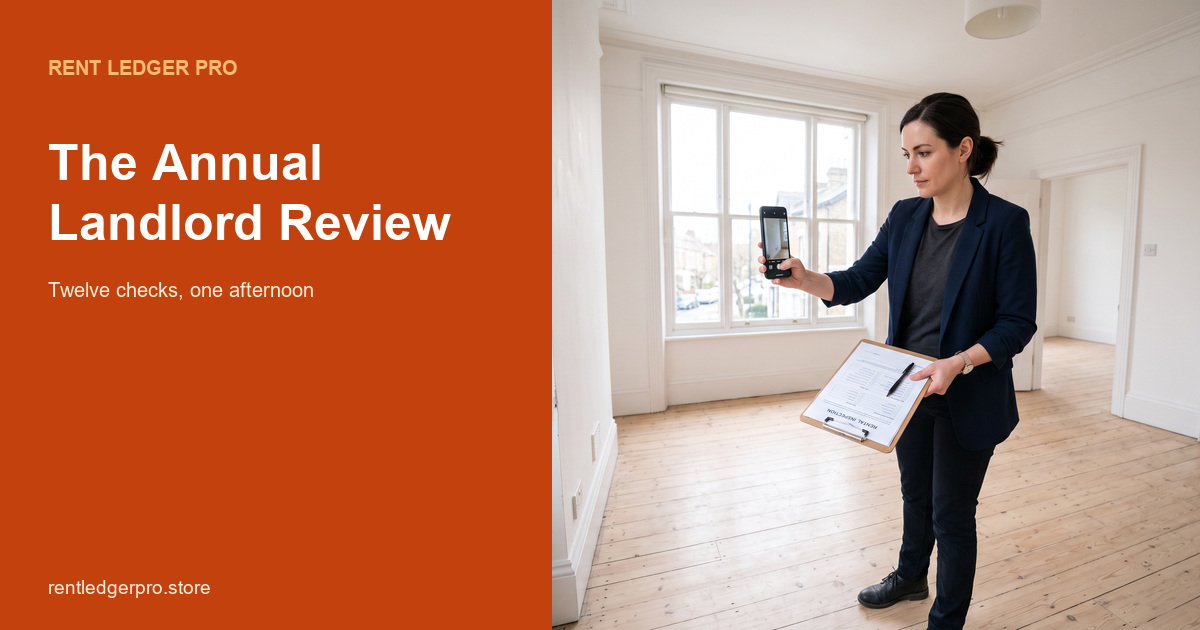
Most landlords look at a property properly twice: once when they buy it, and once when something goes wrong. In between, it runs on assumptions — that the rent is about right, the certificates are in date, the mortgage is fine, and the numbers still work.
An annual review replaces those assumptions with answers. Twelve checks, one afternoon, once a year. Pick a fixed month and keep it — the start of the tax year works well, because half the figures you need are being gathered anyway.
Part one: the numbers
1. Did it actually make money?
Add up the year's rent received and every expense, per property. Compare it with what you expected when you bought. Not the yield on the listing — the cash flow that actually reached your account.
2. Net yield and cash-on-cash, against last year
Net yield tells you whether the property is a good asset. Cash-on-cash return tells you whether your deposit is earning its keep. Watch the trend more than the number. A property sliding a little every year is telling you something. See how to calculate rental yield.
3. Rent collection rate
Rent received divided by rent due. Anything under 100% is money you earned and do not have. If arrears are building, deal with them now — the rent arrears guide covers the early steps, and why the timing matters under the current possession rules.
4. Stress test
What rate would turn this property negative? How far could the rent fall before it cost you money? Rerun it every year, because both answers drift. Stress-testing your rental shows how, in half an hour.
Part two: the rent and the tenancy
5. Is the rent at market?
Compare the rent with genuinely similar properties currently letting nearby — not the most optimistic listing. In England, increases on assured periodic tenancies now go through the statutory notice process, once a year, and can be challenged if above market rent. How to increase rent covers the process and when holding the rent is the better decision.
6. Is the tenancy paperwork right?
Check that the deposit is protected and the prescribed information was served, that you hold a record of what you gave the tenant and when, and — for tenancies that converted on 1 May 2026 — that your obligations under the Renters' Rights Act are met. See also tenancy deposit rules.
7. Is the tenant staying?
A conversation now is cheaper than a surprise void later. Ask about plans, and about anything in the property that needs attention. Good tenants who feel listened to tend to stay.
Part three: the property
8. Certificates and compliance
List every certificate with its expiry date:
| Item (England) | How often |
|---|---|
| Gas safety check | Every 12 months |
| Electrical installation condition report (EICR) | At least every 5 years |
| Energy performance certificate | Valid 10 years; currently a minimum rating of E to let |
| Smoke and carbon monoxide alarms | Checked working at the start of each tenancy |
| Licence (HMO, additional or selective) | Check the renewal date and any conditions |
Anything expiring in the next twelve months goes in the calendar now. The safety certificates guide has the detail, including proposals to raise energy efficiency standards.
9. Condition
An inspection, arranged with proper notice, with dated photographs. Look particularly for early signs of damp and mould — the issue most likely to become a formal complaint. See damp, mould and disrepair. Note anything that will need replacing in the next two years and budget for it.
Part four: the money around the property
10. Mortgage end date
When does the fixed rate end, and what are the early repayment charges? If it ends in the next twelve months, the planning starts now. When your fixed rate ends sets out the timeline.
11. Insurance
Is the sum insured still the rebuild cost, not the market value? Is everything you declared still true — the type of tenant, whether the property is furnished, whether it is empty? An inaccurate declaration is one of the commonest reasons claims are reduced. See the landlord insurance guide, and rent guarantee insurance if you hold it.
12. Reserve and tax
Is your cash reserve still adequate for this property's outgoings? Are last year's records complete for the tax return — and, if your gross rental income is above the thresholds, for Making Tax Digital? Have any improvement invoices been filed permanently for capital gains tax?
The decision at the end
After the twelve checks, each property gets one of three verdicts:
- Hold as is. Numbers work, compliance is clean, nothing major coming.
- Hold and act. A rent review, a refinance, a repair to plan, a certificate to renew. Write down the action and the date.
- Review whether to keep it. The numbers have drifted and are not coming back, or the property needs money it will never return. Not a decision to make in an afternoon — but one worth starting to think about.
Most years, most properties are "hold and act". The value of the review is catching the one that is quietly sliding into the third category before it gets there.
Frequently asked questions
How long does it take?
If records are kept through the year, about an hour for the first property and much less for each one after. If they are not, the first review is mostly spent building the records — which is itself worth doing.
Should I do it all in one sitting?
The numbers, yes — it helps to see every property side by side. The inspection and the tenant conversation happen on their own timetable.
Does my letting agent do this?
A good agent handles parts of it: compliance reminders, inspections, rent reviews. The financial judgment — whether a property still earns its place — is yours.
What month should I choose?
April or May works for most, lining up with the tax year. The important thing is that it is the same month every year.
One file, one afternoon
An annual review is only as quick as the records behind it. When rent, expenses, loan details and dates are already in one place, most of the twelve checks are a matter of reading numbers off a page.
The Rental Property Tracker puts every property's cash flow, net yield, cash-on-cash return, break-even rent and collection rate on one dashboard, calculated from the figures you already record. Up to twenty properties, $27 once.
General information for landlords in England, not legal, tax or financial advice. Compliance requirements vary by property type and location, and some are changing; check gov.uk and your local council for current rules. Last reviewed September 2026.
-
Posted in
cash flow, compliance, record keeping